
The Story of CRBN Pickleball: From a Garage Experiment to One of Pickleball’s Most Innovative Brands
by Pickleball Central Experts on Jul 16, 2026

Not every pickleball company begins with a carefully constructed business plan. Some begin because a player simply cannot find the paddle they want.
That is how the story of CRBN Pickleball began.
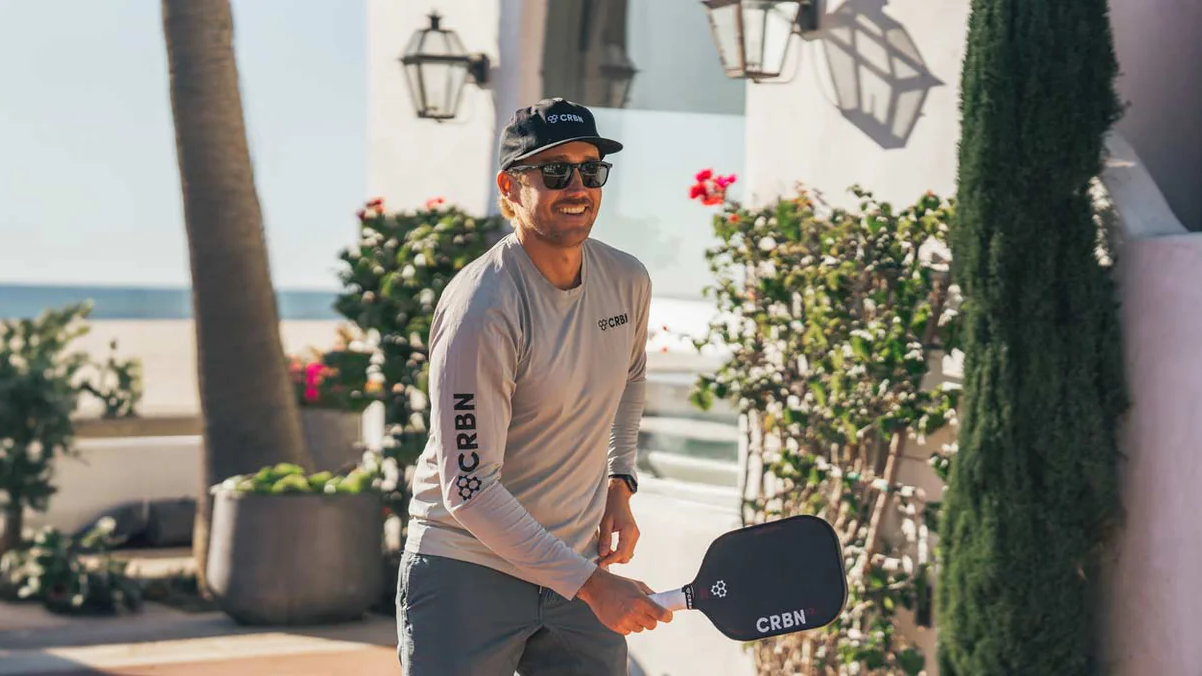
CRBN Co-Founder, Garrett Gosselin
What started as Garrett Gosselin’s search for a more durable, higher-performing tournament paddle quickly attracted attention from other players. His minimalist black carbon fiber prototype looked unlike most paddles on the court, produced the spin he had been searching for, and—most importantly—performed.
Players began asking questions. What was that paddle? Where did it come from? How could they get one?
Those questions helped transform a personal project into CRBN, a California-based company that has become one of the most recognizable and influential names in premium pickleball equipment.
“I started realizing that there was a need for something better. My paddles kept breaking and I wasn’t getting the kind of spin that I wanted. I saw a need for a better product, so I made it for myself.”
— Garrett Gosselin, CRBN Co-Founder
Built by Pickleball Players

CRBN Co-Founders, Kyle Goguen and Garrett Gosselin
CRBN was founded in Southern California by childhood friends Garrett Gosselin and Kyle Goguen. The two had known each other since kindergarten or first grade, long before pickleball became the rapidly expanding professional sport and global industry it is today.
Garrett was the player and product creator. Kyle brought experience in e-commerce, marketing, operations, and business development. Together, they formed a partnership that allowed Garrett to focus heavily on product development while Kyle helped turn the growing demand into a sustainable company.
In the beginning, however, neither of them was trying to create a major paddle brand.
Garrett was playing pickleball constantly and competing in tournaments. At the time, many paddles were built with fiberglass or other composite faces and often featured bright, highly visible graphics. Garrett wanted something different: a clean, serious-looking paddle with a carbon fiber face, strong spin potential, and the durability to stand up to frequent play.
He designed the original paddle for himself and his tournament partner. It was sleek, nearly all black, and built around the performance characteristics they wanted on the court.
Then they started winning—and people started noticing.
Why the Name CRBN?
The company’s name came directly from its original product focus.
CRBN—pronounced “carbon”—is simply the word carbon with the vowels removed. At a time when raw carbon fiber had not yet become the near-standard material it is among premium paddle manufacturers, the name clearly communicated what made the company different.
The understated name also fit the paddle’s minimalist identity. Rather than trying to compete for attention with louder colors and graphics, the original CRBN paddle stood out by looking clean, technical, and purpose-built.
The Paddle Players Couldn’t Stop Asking About
When Garrett and his partner began using their carbon fiber paddles in competition, other players wanted to know what they were seeing.
The paddles looked different, generated impressive spin, and were being used by a team that kept winning matches. Players reportedly approached them with questions such as, “What is that?” and “How are you beating everyone?”
The interest was strong enough that Garrett and Kyle decided to make the paddle available for sale. Their initial production run sold quickly, confirming that the need Garrett had identified was shared by many other serious players.
CRBN officially began building momentum in 2021. For a young company entering a rapidly growing but increasingly crowded market, its timing, visual identity, and focus on high-performance raw carbon fiber proved to be a powerful combination.
From Packing Orders in a Garage

CRBN Founders and Families
The early days of CRBN looked very different from the established brand players know today.
Garrett and Kyle handled much of the work themselves, with help from family members. Garrett’s mother and Kyle’s wife helped pack and ship orders as demand continued to grow. Inventory moved through the garage nearly as quickly as it arrived.
The operation may have been small, but the product was already reaching influential players. CRBN paddles began circulating within the competitive and professional pickleball communities, earning credibility among players who cared more about performance than flashy marketing.
That organic growth helped establish one of the defining characteristics of the brand: CRBN was not a traditional sporting-goods company attempting to enter pickleball. It was a pickleball company being built by people who played the game, understood its equipment, and were responding directly to what players wanted.
The CRBN¹ and the Beginning of a Paddle Family
The original CRBN¹ established the brand’s identity. Its elongated shape gave players additional reach, leverage, and room for a longer handle, making it especially appealing to former tennis players and aggressive competitors.
CRBN later expanded its lineup with additional shapes, allowing players to select a paddle based on how they move and strike the ball.
| CRBN Shape | General Playing Style | Often Best For |
|---|---|---|
| CRBN¹ | Elongated shape with extra reach, leverage, and a longer handle. | Singles players, former tennis players, two-handed backhands, and aggressive baseline play. |
| CRBN² | Wider, more traditional shape with a forgiving hitting area. | Doubles players, control-oriented players, and those who prioritize stability and quick hands. |
| CRBN³ | An elongated paddle with a slightly larger face and a shorter handle. | Players who like the advantages of an elongated paddle but prefer a little more forgiveness, stability, and a shorter handle than the CRBN¹. |
These shape options became an important part of CRBN’s approach. Rather than assuming one paddle could suit every player, the company created different profiles around common competitive playing styles.
Explore CRBN Pickleball Paddles
Compare the current CRBN paddle lineup, shapes, specifications, prices, and availability at Pickleball Central.
Shop CRBN PaddlesThe X Series Raises the Power
As paddle construction evolved, so did CRBN.
The CRBN X Series introduced a more powerful, thermoformed style of construction while preserving the raw carbon fiber feel and spin potential that helped make the brand famous.
Thermoforming uses heat and pressure to create a more unified paddle structure. Foam around the perimeter can increase stability and enlarge the effective sweet spot, while a stiffened construction can return more energy to the ball. The result is generally more pop and put-away power than players experience with a traditional, non-thermoformed control paddle.
Because the X Series has been offered in CRBN’s recognizable shape families, players can pursue additional power without completely abandoning their preferred dimensions.
For many players, the X Series represents CRBN’s transition from a raw carbon fiber pioneer into a company capable of competing at the front of the thermoformed paddle movement.
A Culture of Innovation
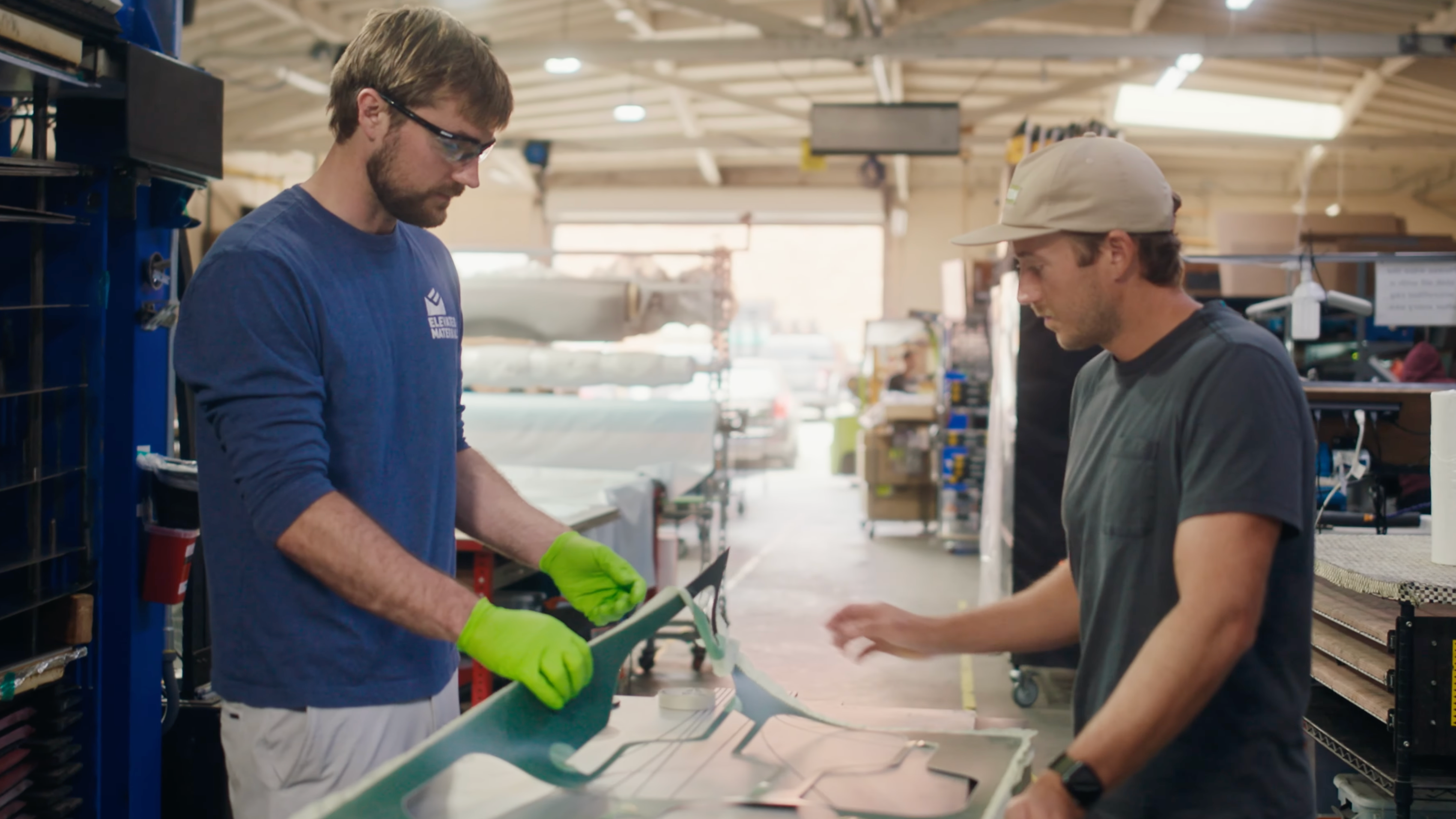
CRBN Machine Shop in Southern California
CRBN’s early success could have encouraged the company to simply release small variations of the same paddle. Instead, innovation became a central part of its identity.
Garrett leads much of CRBN’s research and development, while Kyle serves as a sounding board and focuses more heavily on the marketing and operational sides of the business. That separation gives the company room to experiment while still moving products from concept to market.
One of CRBN’s biggest advantages is its ability to prototype rapidly in Southern California. Working with an engineer and a machine shop in the Los Angeles area, the team can sometimes create a new prototype within a day, test it on the court, provide feedback, and begin modifying the next version almost immediately.
“We can move way faster than some of the big brands because there’s so much red tape they have to work through. We have a machine shop in L.A. where our engineer can produce prototype paddles in one day.”
— Kyle Goguen, CRBN Co-Founder
Traditional overseas prototyping can involve weeks of communication, manufacturing, shipping, testing, and revision. CRBN’s domestic development process allows its team to evaluate more ideas in less time.
That process became especially important when the company began working on its most ambitious paddle project yet.
Starting Over with TruFoam
Most modern pickleball paddles have traditionally been built around a polypropylene honeycomb core. Newer generations of paddles have added perimeter foam, internal foam, carbon fiber structures, or other reinforcing materials around that familiar foundation.
CRBN decided to approach the problem differently.
Rather than enhancing a conventional honeycomb core, Garrett, Kyle, and their engineer began exploring whether they could replace it altogether.
Their inspiration partly came from another sport they enjoyed: surfing. Early experiments attempted to build a paddle almost like a miniature surfboard, even testing internal stringer-style structures similar to those used to reinforce surfboards.
The team experimented with different foams, densities, face layups, internal structures, and configurations. Some early versions did not perform well. Others reportedly hit with far too much power to become practical, legal tournament paddles.
But those extreme prototypes proved that the concept had potential.
The challenge was learning how to control it.
More Than 200 Prototypes
The road to TruFoam was not a quick product refresh.
CRBN’s founders estimated that the team produced well over 200 prototypes. The company tested different foam densities, internal void patterns, face constructions, power levels, sweet-spot sizes, and overall playing characteristics.
The goal was to find what Garrett described as the “Goldilocks paddle”—not too powerful, not too soft, and not too demanding. It needed to offer enough forgiveness for all-court play while still delivering the speed and spin expected from a premium performance paddle.
Rapid prototyping helped CRBN develop the concept, but scaling a handcrafted prototype into a consistent mass-produced paddle created an entirely different challenge. Factories had not previously worked with the same combination of materials and processes, requiring new machinery, modified production methods, and a lengthy period of refinement.
What Makes TruFoam Different?
TruFoam is not simply a standard honeycomb paddle with foam placed around the edges. Its core is built around a proprietary high-density foam structure with carefully designed internal voids.
Those voids are a critical part of the design. By adjusting their shape, position, and distribution, CRBN can influence how the paddle flexes, how long the ball remains in contact with the face, how forgiving the sweet spot feels, and how much energy is returned during an aggressive swing.
In other words, the foam is not merely filler. The entire core becomes an adjustable performance platform.
- More consistent core performance: The solid foam structure is designed to resist the type of internal crushing associated with some honeycomb and foam-enhanced paddles.
- Predictable feel: CRBN designed TruFoam to play consistently rather than relying on a dramatic break-in period.
- Longer dwell time: Controlled flex can help the ball stay on the face slightly longer, supporting shape, spin, and directional control.
- Reduced vibration: Foam can create a softer, more muted response than the sharper plastic-on-plastic sensation associated with some honeycomb paddles.
- A platform for future development: CRBN can alter internal geometry and density to create future paddles emphasizing control, power, forgiveness, or other performance traits.
CRBN views TruFoam not as a single paddle feature, but as a foundation upon which an entire family of future products can be built.
Rethinking the Paddle “Break-In” Period
One of the most notable parts of CRBN’s TruFoam philosophy is its position on paddle break-in.
Some thermoformed and foam-enhanced paddles change noticeably after hours or weeks of use. The paddle may become softer, livelier, or more powerful as internal materials compress and separate. That change is sometimes described as a beneficial break-in period.
CRBN’s founders view a significant change in performance differently.
“How it plays day one is how it’s going to play through its lifetime, outside of some of the other things we talked about, like the surface or the edge guard.”
— Kyle Goguen
Every paddle will experience normal wear. Surface texture can gradually smooth, an edge guard can become damaged, and grips eventually need to be replaced. CRBN’s objective is to prevent the core itself from changing so dramatically that the paddle becomes a fundamentally different product after extended use.
For competitive players, that consistency matters. A paddle that behaves predictably from one session to the next can inspire more confidence during resets, speedups, counters, serves, and aggressive third shots.
Why a 14mm Core Can Still Feel Forgiving
Pickleball players have traditionally been taught that a thicker paddle provides more control and a thinner paddle provides more power. That remains a useful general guideline for many honeycomb paddles, but TruFoam gives CRBN additional ways to influence performance.
CRBN chose a 14mm platform for its initial TruFoam development because the profile feels fast and aerodynamic. Rather than adding thickness to create additional dwell time and forgiveness, the company can tune the internal foam structure and void pattern.
The result is a paddle that can retain the speed and directness associated with a 14mm design while producing some of the shape, dwell, and forgiveness players often associate with thicker paddles.
This ability to manipulate performance from the inside is one of the reasons CRBN believes foam-core construction has so much long-term potential.
A New Hybrid Shape
One of the biggest additions to the TruFoam lineup wasn't just a new paddle—it was an entirely new, hybrid shape.
With the introduction of the CRBN⁴, CRBN expanded beyond its traditional elongated and widebody offerings by introducing a modern hybrid design featuring its new AeroCurve profile. The paddle measures approximately 16.2 inches long with a 7.75-inch face, creating a shape that sits between a standard and elongated paddle while maintaining a comfortable 5.5-inch handle.
The result is a paddle built for today's fast-paced game. Compared to the elongated CRBN¹ and CRBN³, the CRBN⁴ swings noticeably faster through hand battles while still providing excellent reach. Compared to the square CRBN², it offers additional offensive capability without giving up the connected feel and consistency that define the TruFoam platform. The Genesis 4 is faster than the Genesis 1, more stable than the Genesis 2, and offers more finesse than the power-oriented Genesis 3.
The AeroCurve taper also reduces drag near the top of the paddle, helping players reload more quickly at the kitchen, speed up hand exchanges, and generate extra whip on drives and serves. Combined with CRBN's proprietary 14mm TruFoam core and T700 Raw Carbon Fiber face, the CRBN⁴ is designed to deliver an exceptional balance of speed, stability, spin, and touch.
Explore the CRBN TruFoam Paddle Lineup
CRBN’s TruFoam platform is available in several performance-focused collections. Each lineup uses a purpose-built foam core, but the paddles are tuned for different combinations of control, all-court versatility, power, and speed.
Not sure which collection fits your game? Compare all available CRBN TruFoam paddles, shapes, specifications, and prices at Pickleball Central.
View the Complete CRBN TruFoam LineupWhich CRBN Paddle Is Right for You?
CRBN paddles share a focus on spin, premium materials, and competitive performance, but they do not all play the same. The best choice depends on the shape, feel, and level of power you prefer.
| Paddle Family | General Character | Consider It If You Want |
|---|---|---|
| CRBN Original Series | Traditional raw carbon fiber feel with an emphasis on control, spin, and connection to the ball. | A more familiar, controlled response without the additional pop of a stiffer thermoformed paddle. |
| CRBN X Series | Thermoformed construction with increased stability, pop, and offensive potential. | More help finishing points while retaining the spin and shape selection associated with CRBN. |
| CRBN TruFoam Series | Distinctive foam-core feel focused on consistency, dwell, durability, and tunable all-court performance. | Something genuinely different from a conventional polypropylene honeycomb paddle. |
Availability can change as models, thicknesses, and colors are released or retired. Visit the CRBN collection at Pickleball Central to compare the current options.
More Than Paddles
Although paddles remain at the center of CRBN, the company has expanded into additional categories, including performance eyewear, bags, apparel, grips, paddle-care products, and other accessories.
Its eyewear is an especially natural extension of the brand’s philosophy. Rather than treating eye protection as a generic accessory, CRBN has focused on purpose-built products designed around the movement, visibility, and impact risks associated with pickleball.
Still, the founders have acknowledged the danger of trying to develop too many products at once. Their focus remains on prioritizing ideas that meaningfully improve the experience of players rather than expanding simply for the sake of having a larger catalog.
A Brand with a Global Future
CRBN’s story began on Southern California courts, but its future is increasingly international.
As pickleball grows throughout Asia, Europe, Australia, Latin America, and other regions, players are seeking the same high-performance equipment used in the United States. CRBN’s founders have identified international retail and distribution as an important part of the company’s next stage.
That expansion creates a new challenge: developing innovative products is only part of the equation. The company must also build the teams, partnerships, and distribution channels needed to get those products into players’ hands.
For a company that once struggled to keep its first paddle in stock while fulfilling orders from a garage, worldwide demand is a remarkable sign of how far the brand has come.
Built by Players. Trusted by Pros.
CRBN on the Professional Stage
CRBN’s growth has been supported by an accomplished team of professional athletes competing across the PPA Tour and Major League Pickleball. These players bring different styles to the court, but each relies on CRBN equipment in the highest-pressure moments of competition.
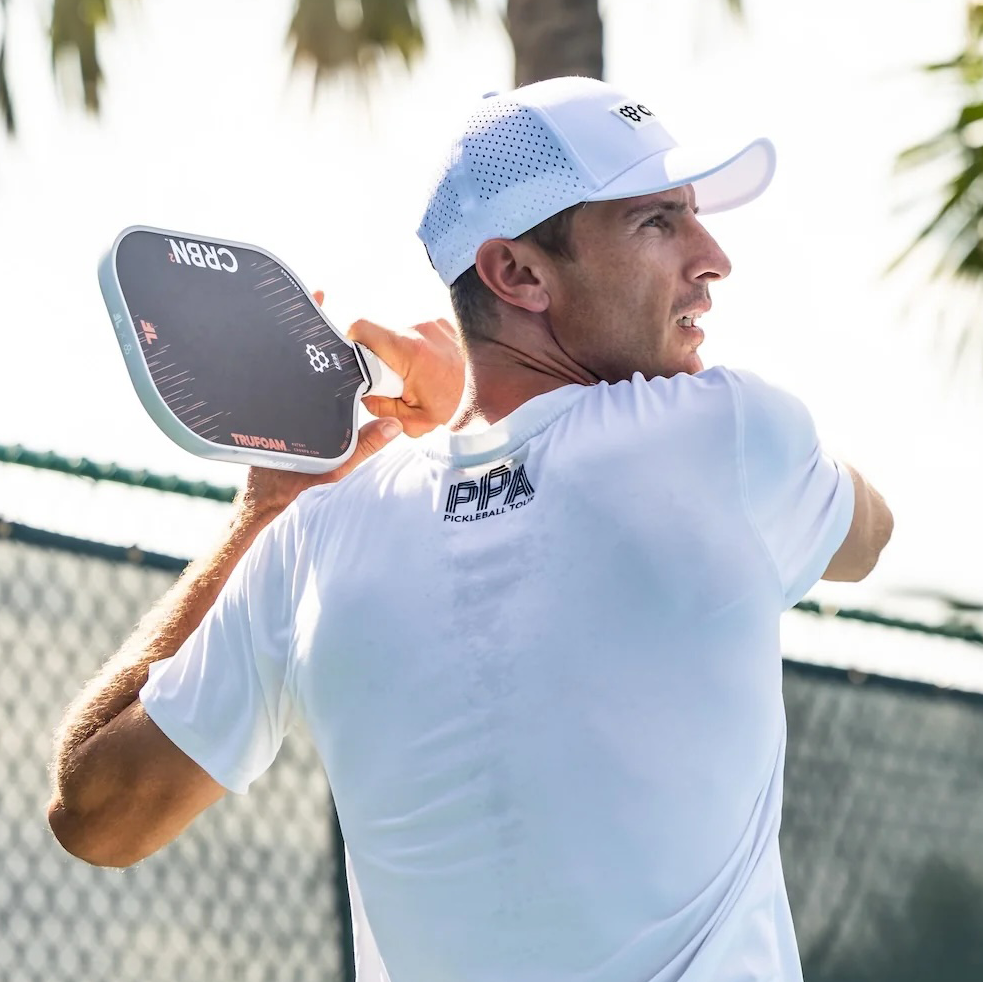
PPA & MLP Pro Player
Andrei Daescu
A former ATP professional and Romanian Davis Cup player, Andrei Daescu has become one of professional pickleball’s most imposing doubles competitors. His reach, court awareness, net presence, and disciplined strategy make him a consistent threat at the highest level.
CRBN Paddle: CRBN³ TruFoam Barrage
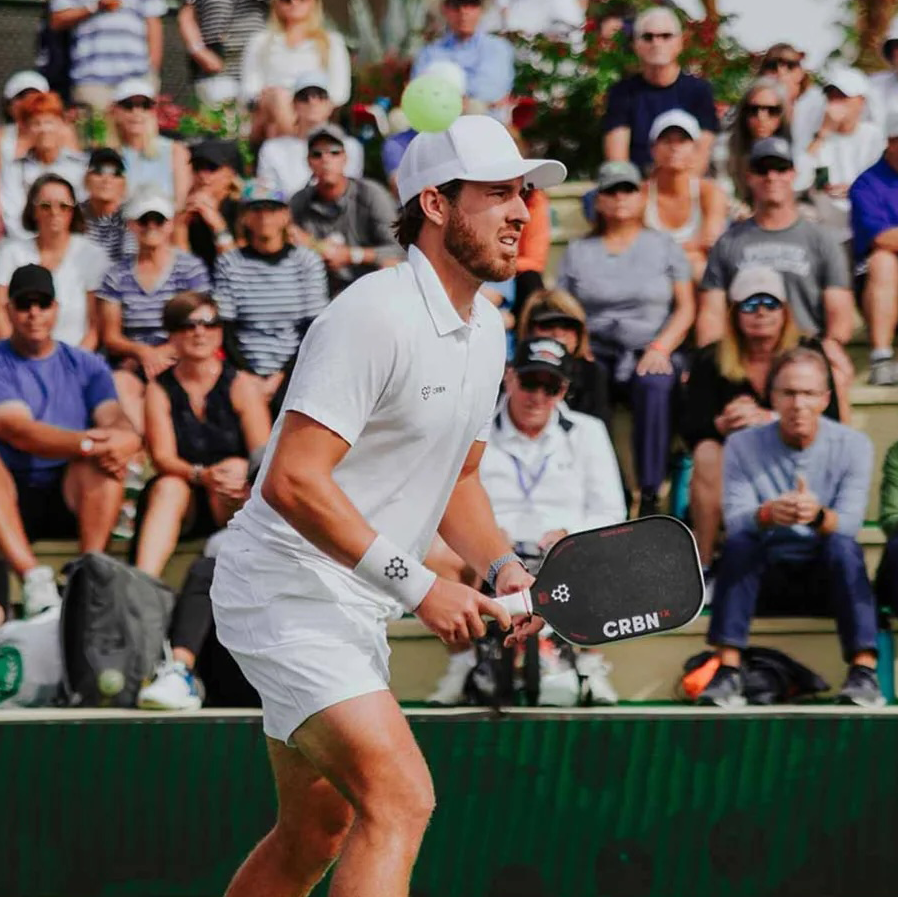
PPA & MLP Pro Player
Thomas Wilson
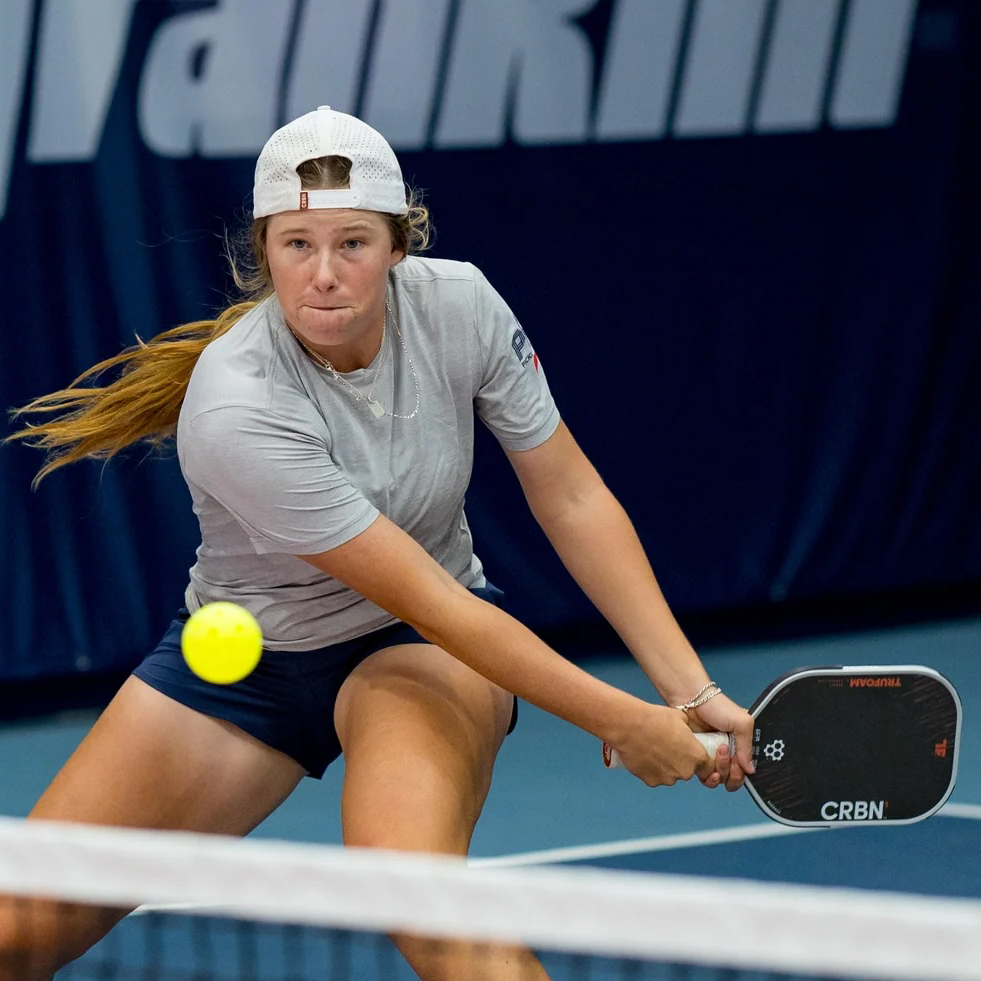
Thomas Wilson quickly established himself as an elite professional with a dangerous forehand, exceptional anticipation, and the ability to create offense from nearly anywhere on the court. His combination of power and awareness has made him one of the sport’s most respected competitors.
CRBN Paddle: CRBN¹ TruFoam Genesis
PPA & MLP PRO PLAYER
Vivienne David
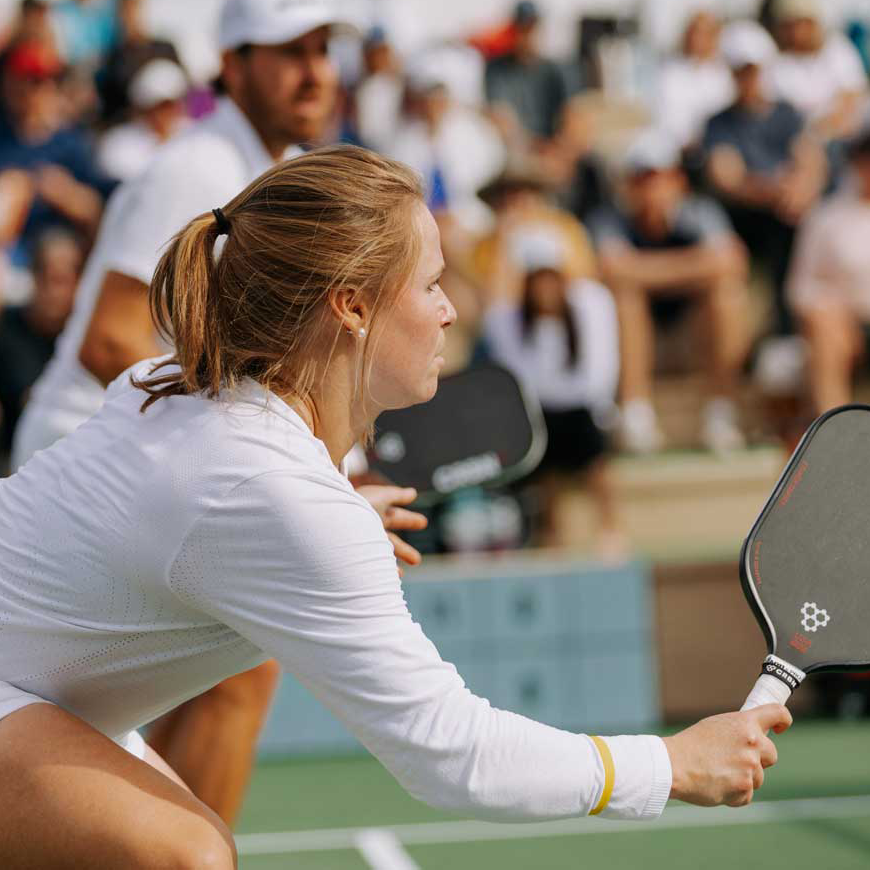
Vivienne David has been competing at the professional level since the early years of the modern tour. A former world championship singles gold medalist and frequent professional podium finisher, she is known for her consistency, smart positioning, and composed all-court game.
CRBN Paddle: CRBN¹ TruFoam Genesis
PPA & MLP Pro PLAYER
Allyce Jones
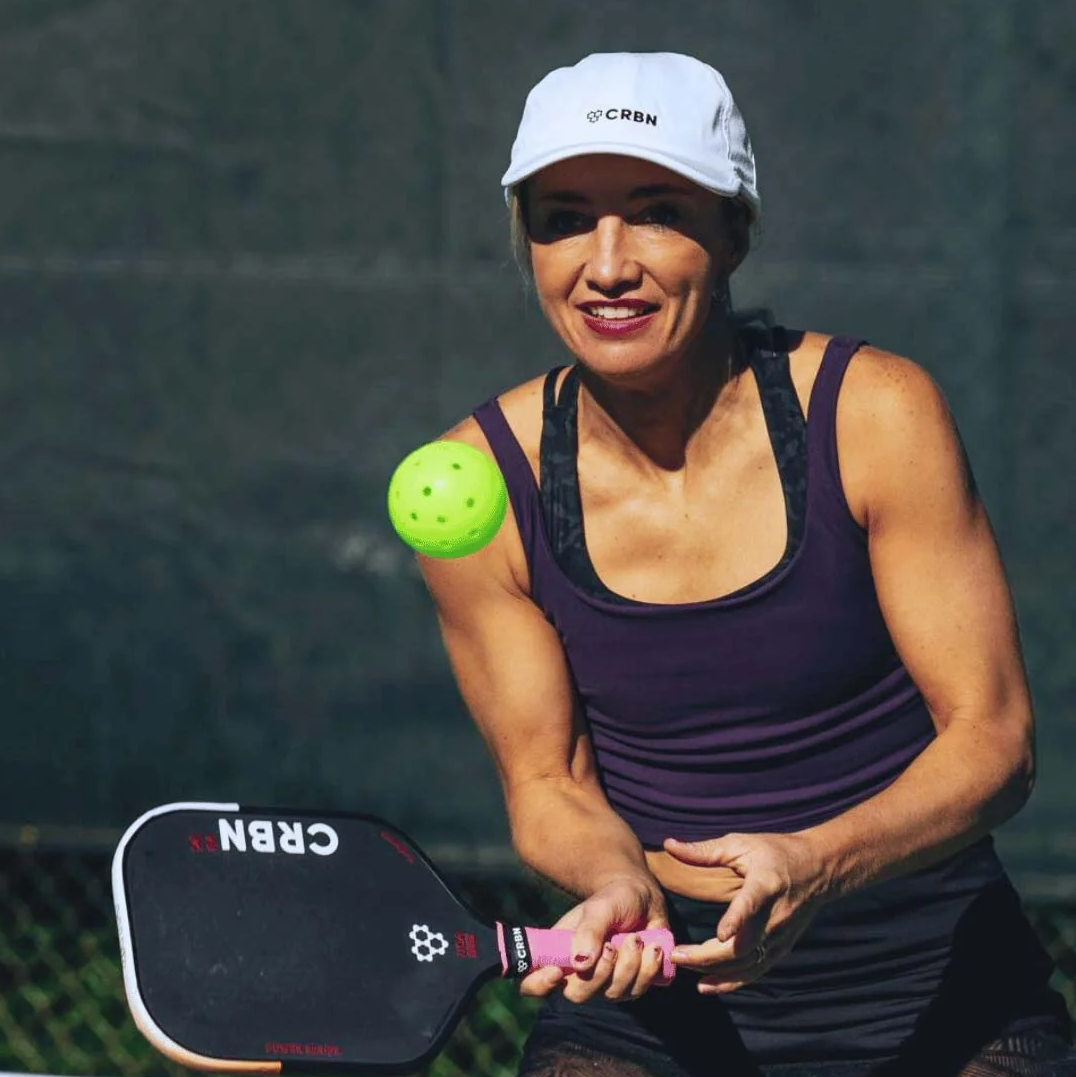
A former multi-sport standout, Allyce Jones is recognized for her athletic defense, relentless effort, and ability to keep seemingly impossible points alive. Her acrobatic court coverage and competitive energy have made her a fan favorite on the professional tour.
CRBN Paddle: CRBN¹ TruFoam Barrage
PRO PLAYER & Influencer
Tanner Tomassi
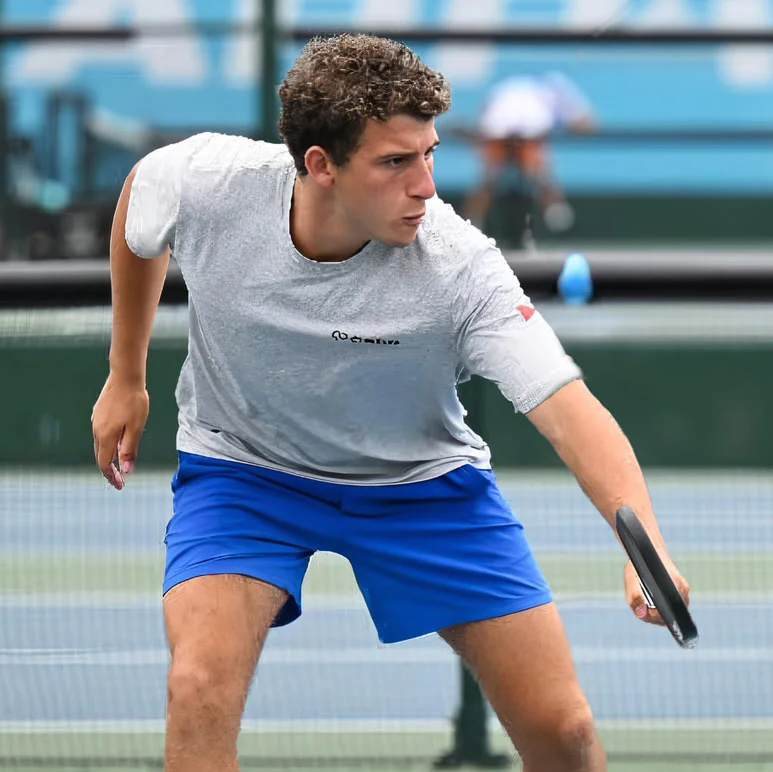
Tanner Tomassi combines explosive professional-level play with one of pickleball’s most visible coaching platforms. His fast hands, aggressive instincts, tactical knowledge, and widely followed instructional content have helped him build an audience that extends far beyond tournament competition.
CRBN Paddle: CRBN² TruFoam Genesis
A Roster Built for Every Level of the Professional Game
Beyond these featured athletes, CRBN supports additional PPA and MLP competitors, APP Tour players, senior professionals, coaches, international athletes, and rising junior talent.
Meet the Complete CRBN Pro TeamStill Built Around the Same Question
Pickleball paddle technology has changed dramatically since Garrett designed that first elongated carbon fiber paddle.
Raw carbon fiber has become common. Thermoforming has reshaped the power-paddle category. Foam has moved from the perimeter toward the center of paddle development. Governing bodies have introduced new tests as manufacturers continue to explore how much performance can be produced within the rules.
Through all of that change, CRBN continues to operate around essentially the same question Garrett asked at the beginning:
Can we build something better for the players who love this game?
That question transformed a personal paddle project into a company. It inspired one of pickleball’s most recognizable raw carbon fiber lineups. It led to hundreds of experiments and an entirely new foam-core platform.
And it is why CRBN remains one of the most interesting brands to watch as the next generation of pickleball equipment takes shape.
Find Your CRBN Paddle
Shop the current selection of CRBN pickleball paddles at Pickleball Central and compare shapes, technologies, specifications, and playing styles.
Shop All CRBN Paddles
Share Product:
SHARE THIS: