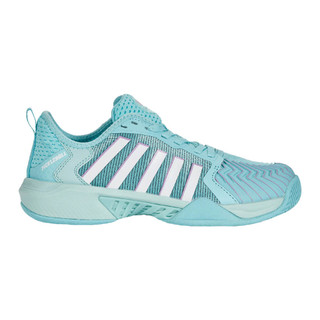
Importance of Proper Pickleball Shoes
by Patrick Moore on Jul 10, 2023

Pickleball Footwear Guide
The right court shoes can improve traction, stability, and comfort while helping reduce fatigue and injury risk.
Quick takeaway: Running shoes may feel fine at first, but court-specific shoes are built for lateral movement, grip, and support that pickleball demands.
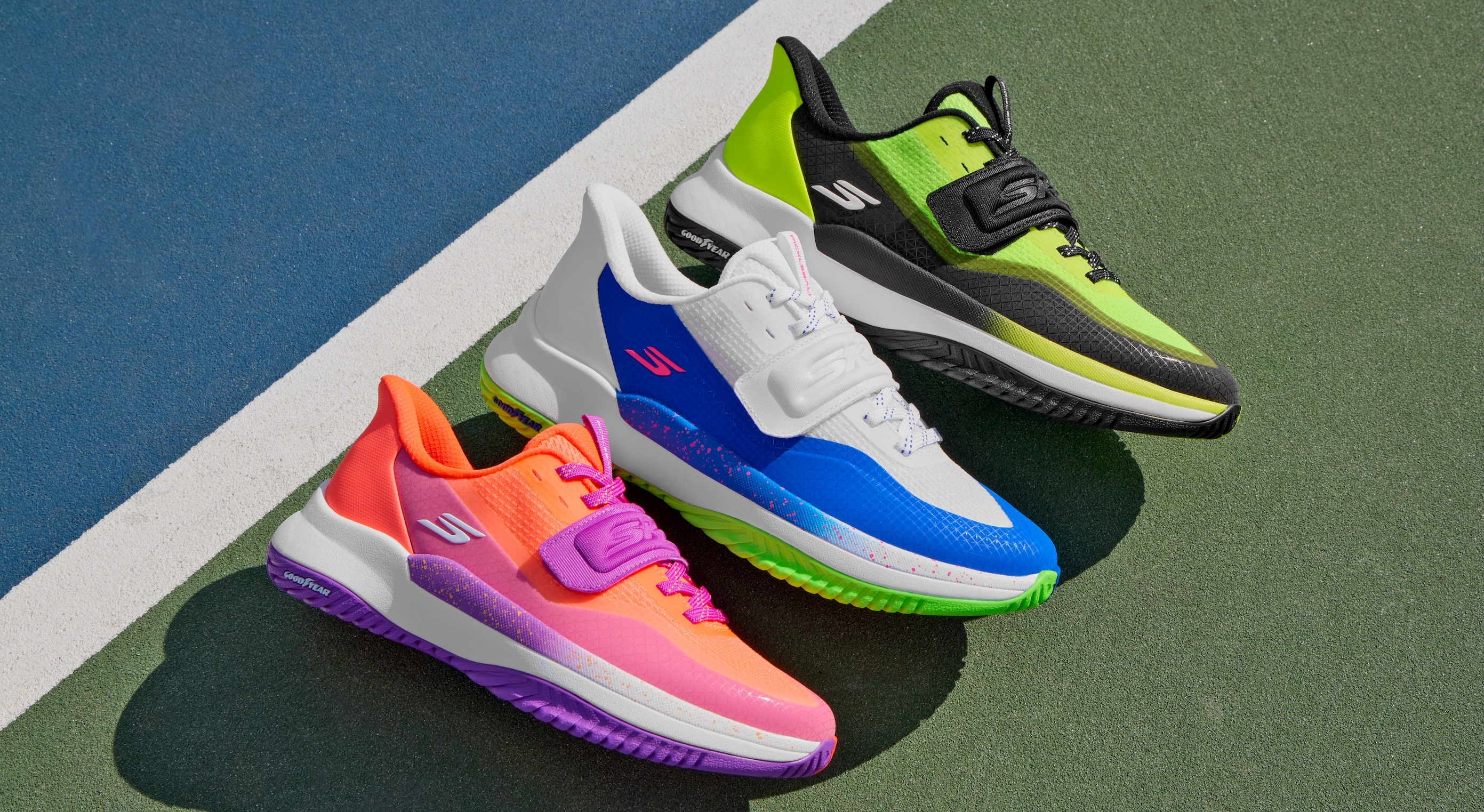
Why Wear Pickleball Shoes?
When you think of pickleball gear you probably think of paddles, balls, and maybe even nets. While these are all necessary, a proper pair of pickleball shoes should also be on your list.
The first time you head out to try pickleball with your friends and their extra gear, your old running shoes may feel like they work fine, but as you progress on the court these shoes will start to affect your game. Athletic shoes not specifically designed for courts lack traction, stability, and support that you need to keep your feet healthy throughout long days of pickleball play.
While all pickleball shoes vary in fit, materials, and design, they all focus on traction that helps you hit with power, stability for changing directions quickly, and support to fight fatigue and injury while you play.
So, what should you look for in your first pair or next pair of pickleball shoes?
01 — Traction
Grip that helps you move with confidence
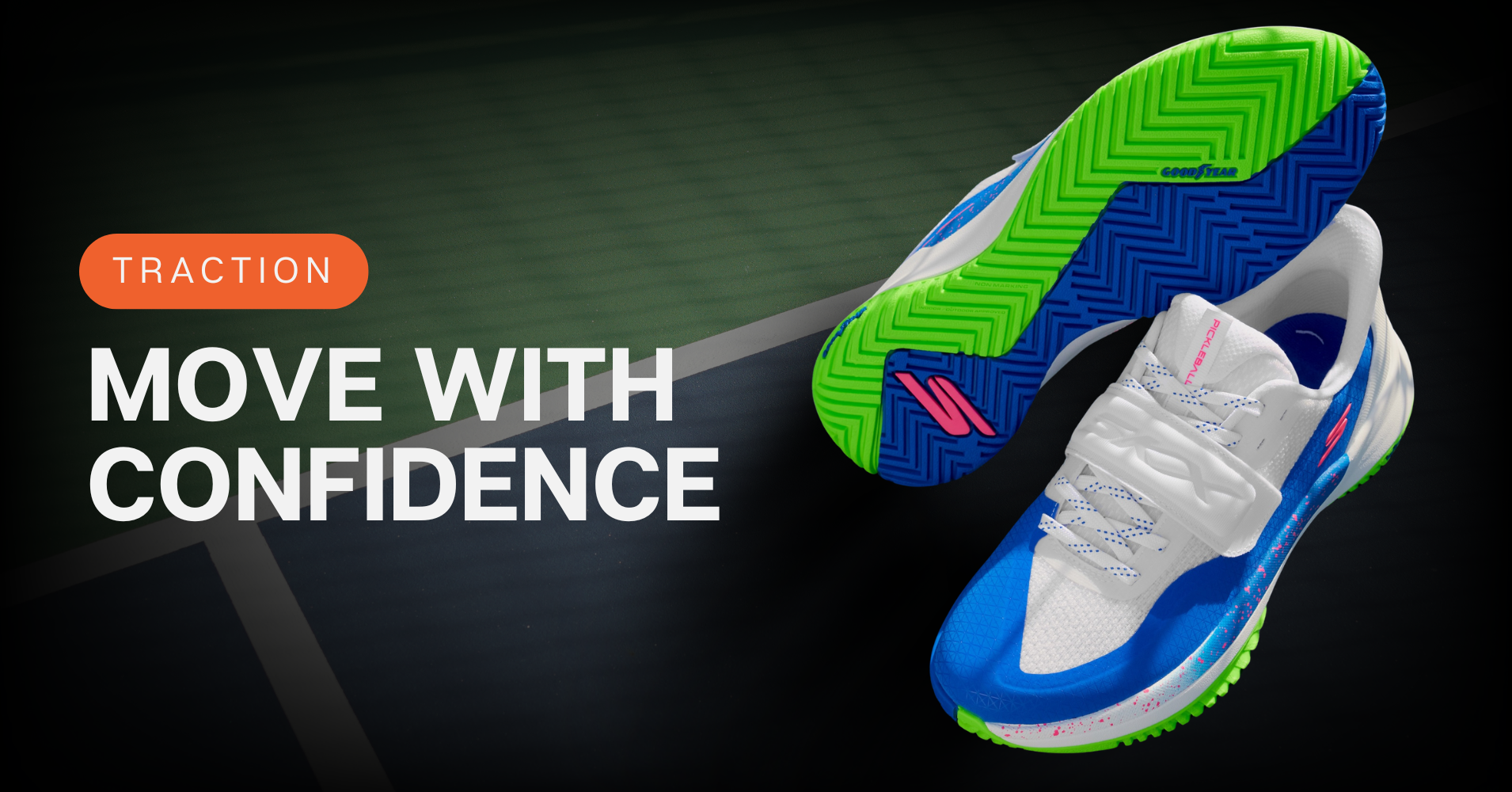
Often the most obvious difference in a pair of pickleball shoes versus running shoes is the outsole. Major brands throughout the industry use both their own non-marking rubber compounds and compounds from major rubber manufacturers to help you maintain your footing throughout a match.
These rubber compounds are soft enough to maintain tacky traction on courts of most materials and conditions, while also being resilient enough to handle wear and tear when you play on a regular basis. Some of the most trusted outsoles in the industry are made by Vibram, Goodyear, and Michelin.
02 — Stability
Built for quick lateral movement
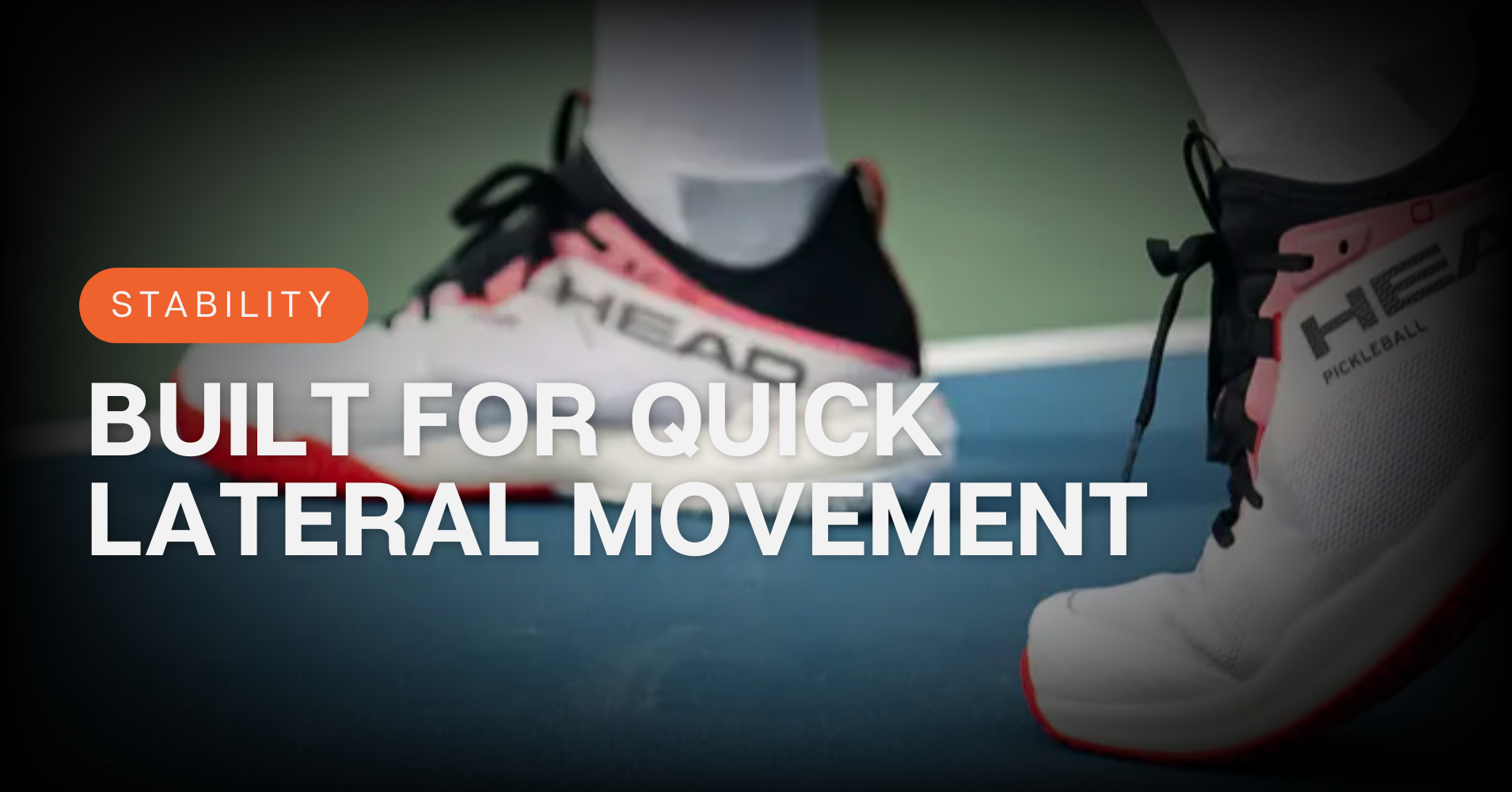
Torsional stability is as important as traction. Shoes designed for pickleball (or tennis, which work fine for pickleball) are designed to provide the stability needed for quick lateral movements. Running shoes, on the other hand, are designed to go forward; their soles flare out wider and there is very little if any torsional stability built in, so it is easy to twist an ankle or suffer other foot injuries if you try to play pickleball in a running shoe.
Court shoes achieve this necessary stability by reinforcing the upper around the big toe and outside of the foot, and by adding a “shank” in the midsole.
The reinforcements on the upper are often visible and easy to identify. Sometimes it is a rubber material that matches the outsole and wraps up over the top of your foot, and sometimes it is a polyurethane overlay on the outside of your foot.
Less obviously, the shank, situated in the midsole, is a rigid material that helps the shoe maintain its shape when you change direction quickly. This piece takes all of your body weight and rebounds it into your leg so that you can trust your step while keeping your eye on the ball.
03 — Support
Cushioning and structure that last through long play
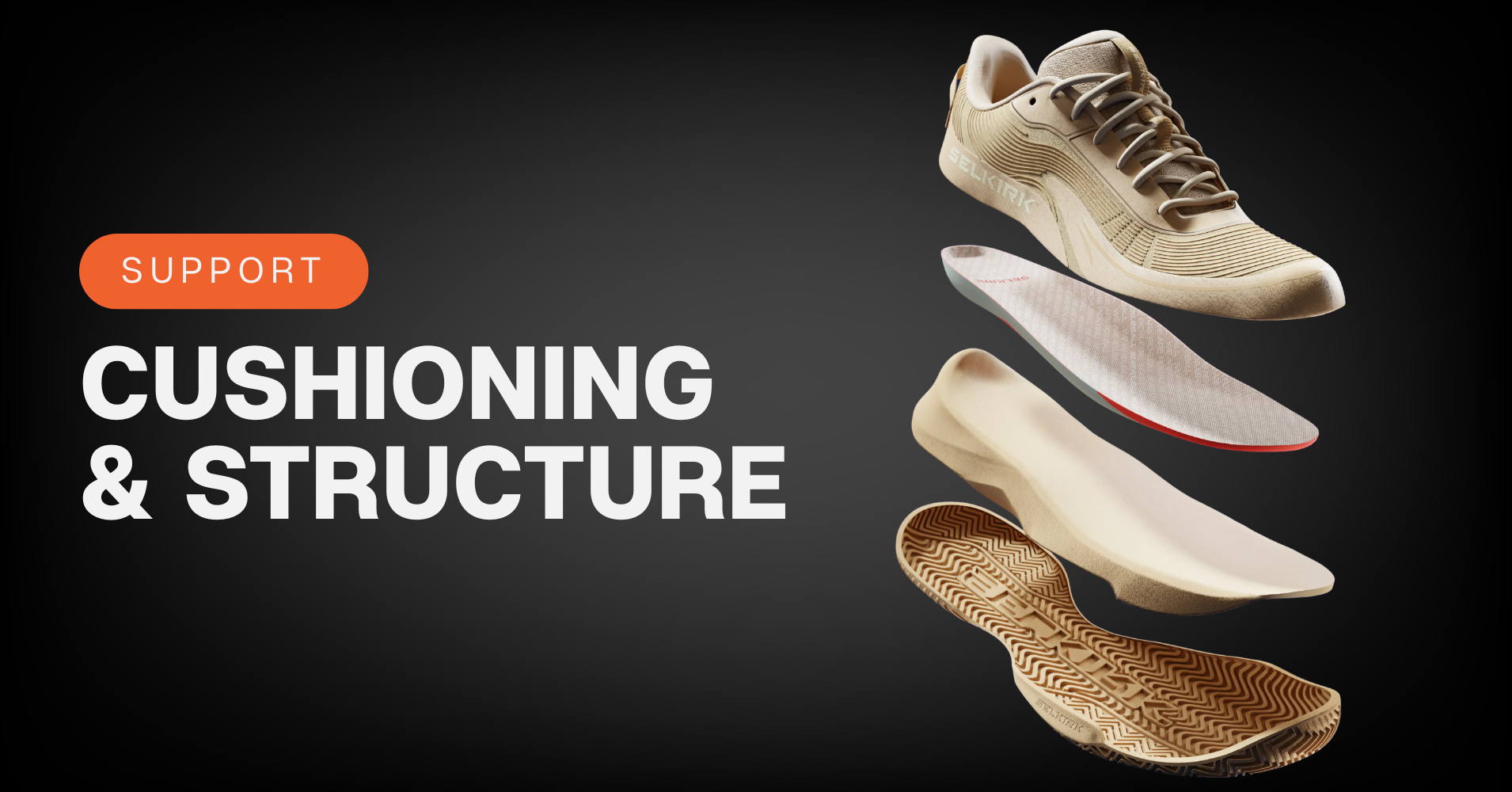
The support of a pickleball shoe is found in the midsole. The midsole is located underneath your foot but above the outsole. Commonly made of either EVA foam or polyurethane foam, this piece of the shoe balances a lightweight feel, support for your arches, and rebound to keep you moving.
Regardless of which material the manufacturer chooses, midsoles on court shoes will keep your legs fresh and your feet free from fatigue while encouraging you to run down tricky shots by propelling you forward.
Like pickleball paddles, different pickleball shoes work for different people. While all court shoes will perform better than other footwear on the court, it may take some trial and error to find the perfect shoe for your foot and style of play.
To ensure that the pair you love lasts as long as possible, we recommend only wearing your pickleball shoes while playing, and wearing a pair of slides or other shoes when commuting to the court.
Find Your Next Pair
Shop court shoes designed to help you grip better, move faster, and feel more secure on the court.
Frequently Asked Questions
Can pickleball shoes be worn on both indoor and outdoor courts?
Yes. There are many materials and styles of outsoles found on pickleball shoes, but the majority of them are capable of thriving both indoors and outdoors. If a shoe is specially designed for one or the other, it should be noted in the product description.
These laces seem too short — am I lacing them wrong?
Laces can be tricky, and every player has a different preference. If you do not like the style or length of laces that come with your shoe, consider replacing them with a different option that better matches your fit preferences.
How do I test out my pickleball shoes while trying them on at home?
Put on the athletic socks you would normally wear for pickleball and lace the shoes up as if you were going to play. Feel for extra space or uncomfortable tightness.
Then walk around indoors for a few minutes. Plant your foot to simulate changing directions, and rock onto the balls of your feet to simulate sprinting. Your foot should feel secure and supported throughout.
Why don’t we list the women’s sizing for men’s shoes?
Product pages can get crowded, and not all manufacturers follow the same sizing rules. Because sizing conversions can vary by brand and model, it is better to verify fit on a shoe-by-shoe basis.
Still Have Footwear Questions?
Reach out to our Customer Service team for help choosing the best pickleball shoe for your game.
Email Customer ServiceShare Product:
SHARE THIS: