
Expert Review: JOOLA Pro V Paddle Series
by Braydon Unsicker, @PickleballEffect on Mar 20, 2026

Contributing EXPERT: Braydon Unsicker, Pickleball Effect
JOOLA Pro V Series Review
A hands-on review of JOOLA’s Pro V platform, including its KineticFrame design, on-court performance, and which players should choose it over the Pro IV or 3S.
JOOLA’s Pro line has been one of the most recognizable paddle families in professional pickleball for several years, with players like Ben Johns, Anna Bright, and Federico Staksrud all competing with versions of it. The line has become closely associated with high-level power paddles.
With the Pro V, JOOLA focused less on reinventing the paddle and more on refining it. Instead of chasing current market trends, the company worked to improve the performance characteristics based on feedback from its pro roster and player base.
In this review, we’ll break down how the Pro V is built, how it performs on court, and which players it fits best.

I’m Braydon Unsicker from Pickleball Effect. I review paddles across the market and try to explain what actually matters when you’re choosing one, based on data and time on court rather than marketing claims.
60-Second Verdict
The Pro V is a different direction for JOOLA’s Pro line. Instead of leaning into easier pop and offense like the Pro IV, it focuses on a more controlled and consistent power profile that rewards players who generate their own swing speed.
If you relied on the Pro IV for effortless power, the Pro V may not feel like an upgrade. But if you bring your own offense and want a paddle that delivers more predictable launches and cleaner feedback through contact, the Pro V is a compelling evolution of the platform.
In short, it’s not a universal replacement for the Pro IV. It’s a more refined, player-driven option that fits a specific type of player very well.
Technology
The key technology JOOLA is introducing is what they call the KineticFrame, a redesigned throat geometry intended to change how the paddle flexes, loads, and releases energy through contact. Outside of that throat redesign, the core construction remains the same as the Pro IV.
JOOLA Pro IV
Flexes more like a diving board
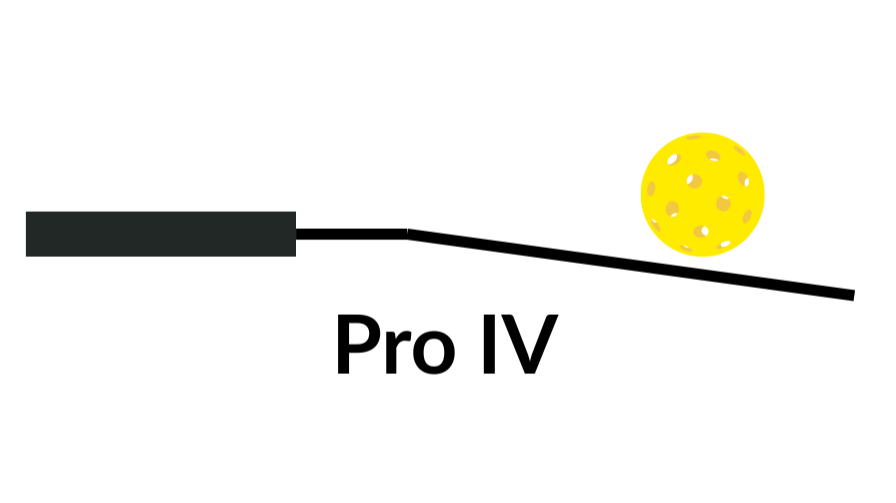
More spring-loaded response with easier pop and quicker energy release.
JOOLA Pro V
Flexes more like a platform
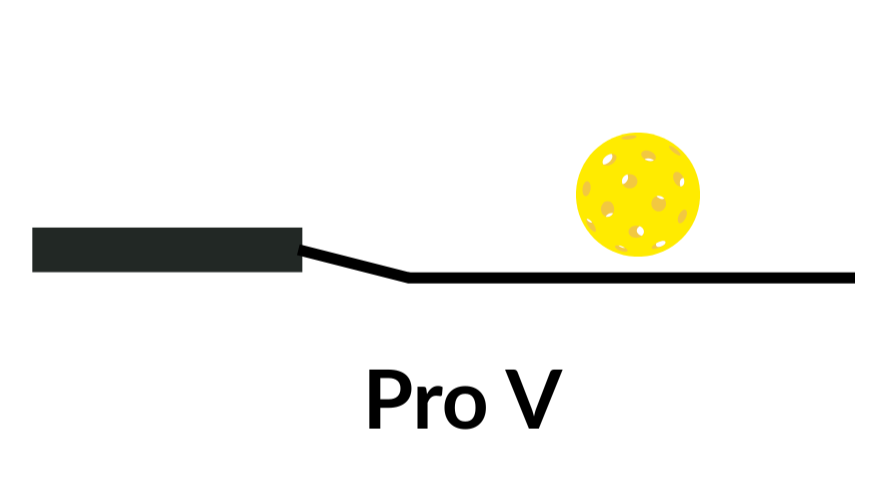
More stable load and release pattern with a smoother, more predictable launch.
These illustrations are simplified visualizations meant to show the difference in flex behavior, not literal engineering drawings. They are exaggerated.
This design aims to create what JOOLA calls “precise power” by producing a more consistent launch angle and energy transfer than a diving board–style flex pattern.
The result is a paddle that requires more deliberate activation to generate power rather than the immediate pop of the Pro IV. It creates a distinct performance profile within the Pro lineup, and I’ll break down how that shows up on court in the performance section.
Here’s a look at a deconstructed paddle that shows the KineticFrame.
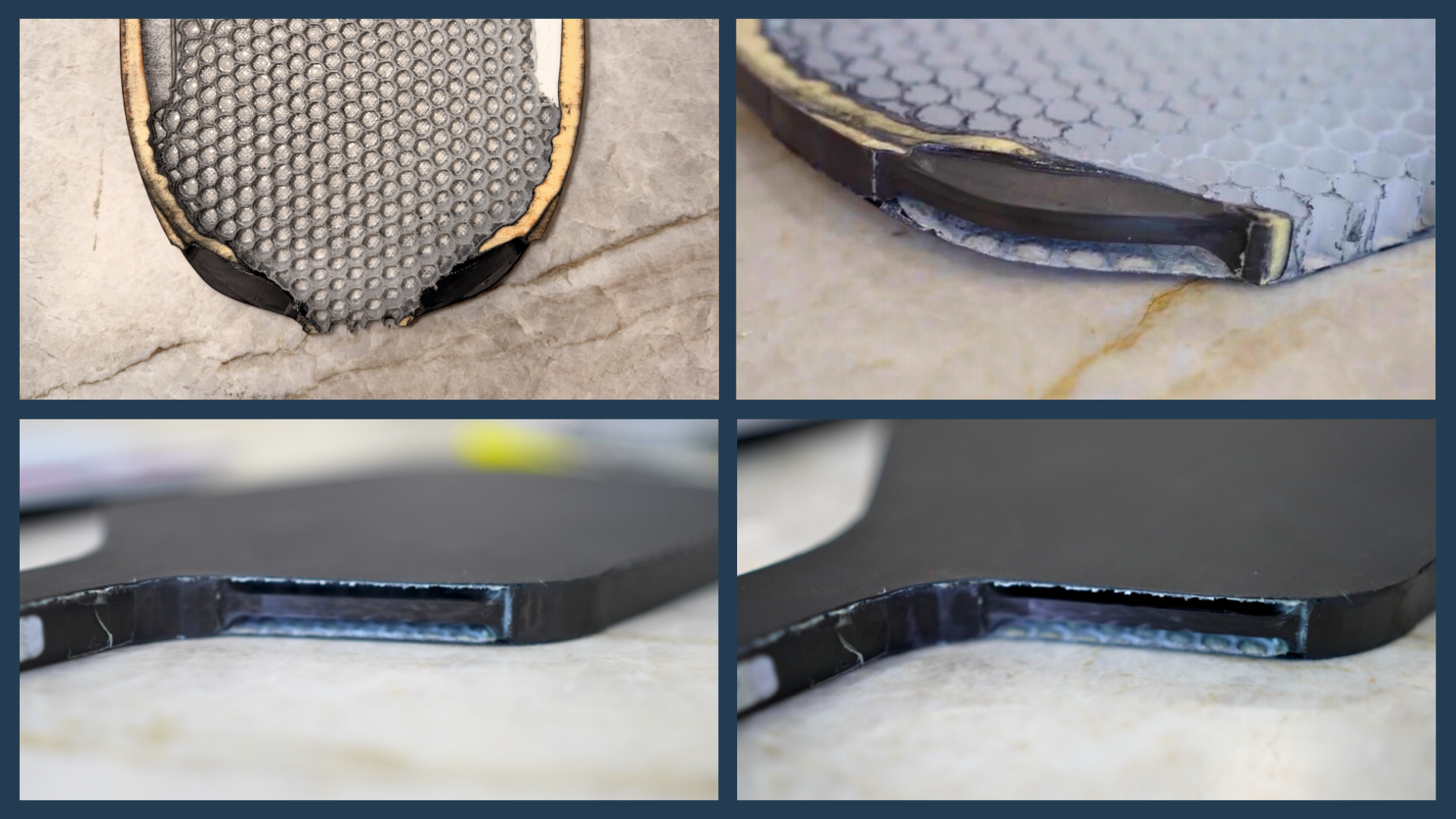
Deconstructed view highlighting JOOLA’s KineticFrame design and internal construction.
On-Court Performance
Because so many players have experience with the JOOLA Pro IV, it’s helpful to frame the Pro V in comparison.
After spending time with both paddles, four key differences stood out.
1. Activated Power
The Pro V doesn’t have the instant pop and easy power of the Pro IV. It requires more effort to unlock its offense. At the same time, it absorbs incoming pace better on softer shots, making it noticeably less poppy while still capable of producing some power.
That was my on-court impression, so I decided to test it.
I had four players of varying skill levels hit eight full-power serves with both the Perseus Pro IV and Perseus Pro V and I measured the average speed with my radar gun. Here were the results:
| Player DUPR | Pro IV (mph) | Pro V (mph) | Difference |
|---|---|---|---|
| 5.8 | 58.3 | 58.2 | 0.1 |
| 5.7 | 60.5 | 61.3 | 0.8 |
| 4.7 | 57.8 | 57.4 | 0.4 |
| 4.3 | 54.3 | 52.6 | 1.3 |
While the sample size is small, the trend lines up with how the paddles feel on court. The Pro IV has more accessible power, while the Pro V can produce equal or greater pace when the player has the ability to generate enough swing speed.
2. More Consistent Response
One criticism some players had with the Pro IV was the occasional “hot” shot where the ball would launch unexpectedly. The Pro V smooths that out.
The response feels more predictable across the face whether you’re driving, dropping, or countering. That added consistency makes it easier to swing confidently from the baseline and trust the ball trajectory.
This is where JOOLA’s KineticFrame design seems to show up the most.
3. Different Impact Feel
The stiff, hollow crack of the Pro IV is gone.
The Pro V has a softer, more solid feel at contact with a more muted sound profile. It still feels firm and performance-oriented, but the impact sensation is noticeably different than the previous generation. The more you play with it and break it in though the feel falls more towards the hollow side than where I have it mapped below.
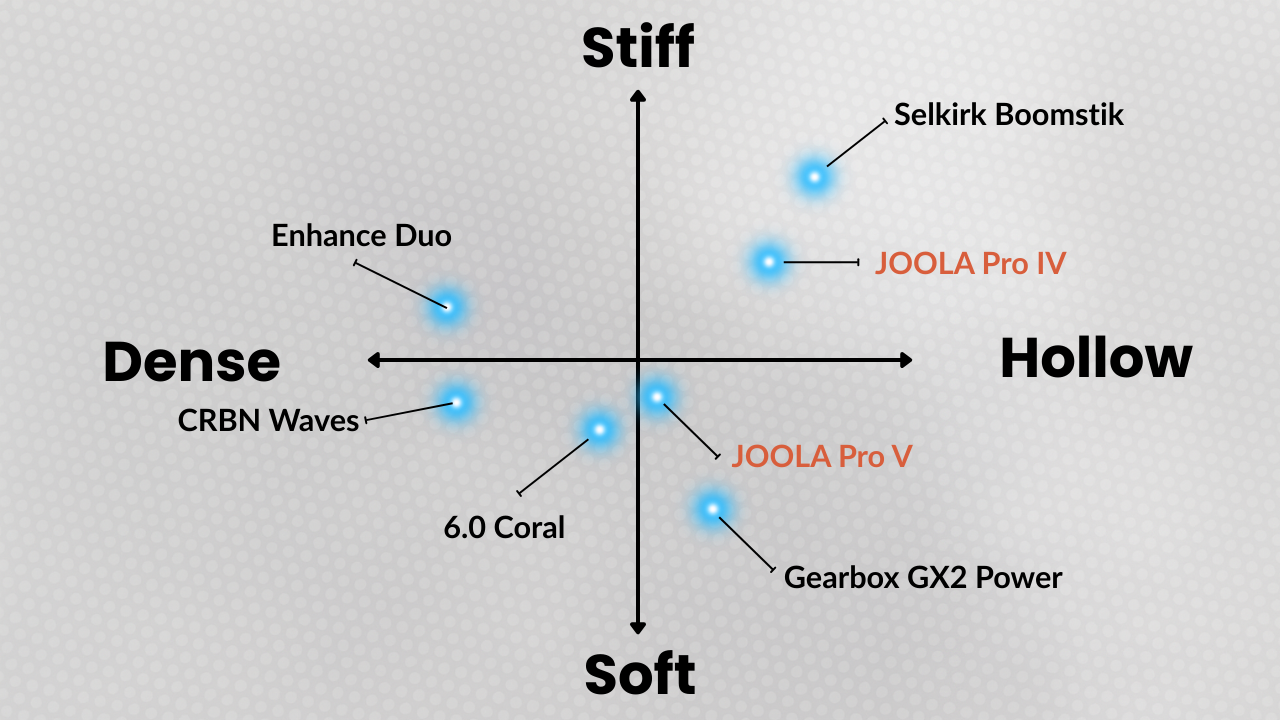
Impact feel comparison showing how the Pro V shifts toward a more controlled, solid response relative to the Pro IV.
What This Means on Court
The Pro V allows for a wider range of shot-making compared to the Pro IV. You can swing more aggressively on dinks to generate spin, create sharper angles, and attack with more precision.
What you don’t get is the effortless offense that the Pro IV could produce on shorter swings. The Pro V rewards players who generate their own pace.
Players with strong mechanics and higher swing speeds, typically around the 5.0+ level, will still see it as a power paddle because they can fully activate its ceiling. Players with more compact swings may experience it more as an all-court paddle.
In short, the Pro V amplifies what you bring to the shot rather than manufacturing offense on its own.
Spin
My testing showed slightly higher spin numbers for the Pro V, but on court the difference wasn’t noticeable. Both paddles generate strong spin out of the box and feel reliable in that department, so players shouldn’t expect a dramatic change there.
One thing to keep in mind is that the surface isn’t a durable grit formula. Like previous JOOLA Pro paddles, the texture will likely wear down faster than some of the newer grit technologies we’ve seen from other brands.
Balance and Forgiveness
The Pro V comes slightly more handle-light than the Pro IV while maintaining similar twist weight numbers, which is a good combination.
That gives the paddle Pro V a bit more maneuverability in stock form while keeping the same forgiveness as the Pro IV. From there, you can either enjoy the quicker feel or add weight to increase stability and shift the balance toward a more traditional setup.
Picking Between the Pro V, IV, and 3S
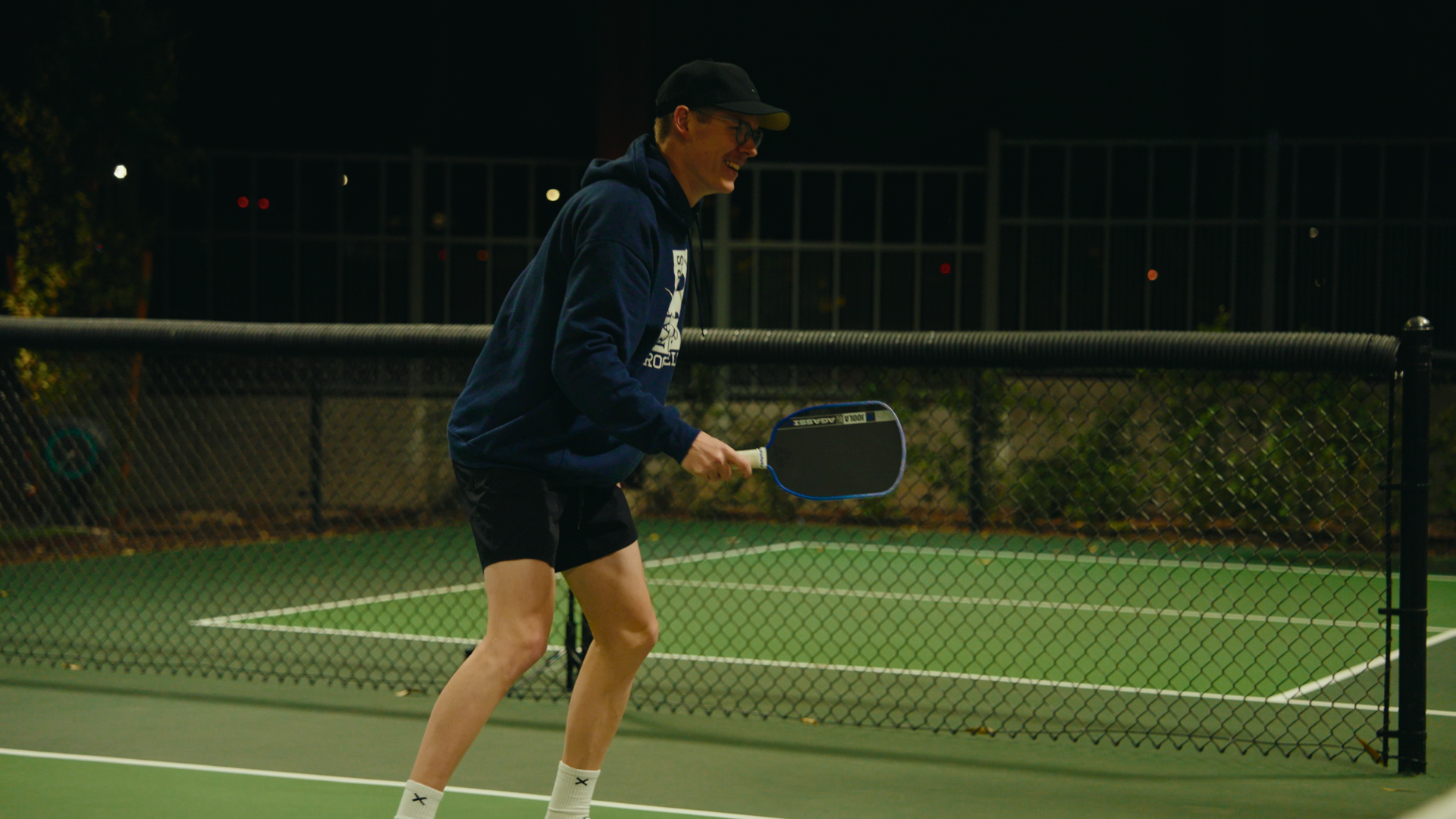
Braydon Unsicker, Pickleball Effect, play testing the JOOLA Pro V paddles.
JOOLA has also lowered the pricing on its previous Pro models and plans to keep them in the lineup, with the Pro IV now at $249.95 and the 3S at $199.95. Because of that, the Pro V shouldn’t automatically be viewed as a replacement. It’s better thought of as a different option within the Pro family rather than a universal upgrade.
If you can generate your own power, you may appreciate the added consistency and control the Pro V provides. But if you rely on your paddle to help create offense, the Pro IV or 3S may still be the better fit.
Go 3S if you want maximum power and pop and don’t mind a little more vibration and feedback.
Learn more >>Go Pro IV if you want a similar offensive ceiling as the 3S but with a smoother, less vibratory feel.
Learn more >>Go Pro V if you bring your own offense and prefer a more controlled, predictable power profile.
Learn more >>Paddle Shapes and Options
Each Pro V shape is available in both 14mm and 16mm core thicknesses, but in this series the 16mm is the better option for most players.
In past JOOLA Pro models, some players preferred the 14mm because it added a bit more predictability and helped control the paddle’s lively response. With the Pro V, however, the paddles come in lighter overall and already have a more controlled power profile. Because of that, the 14mm doesn’t add as much benefit as it did in previous generations, while the 16mm gives you a fuller sweet spot and more stability.
From there, the main decision comes down to paddle shape and how much reach, forgiveness, or maneuverability you prefer.

Perseus (Elongated)
The Perseus is the classic elongated option in the lineup. It provides extra reach and more power potential on full swings vs the hybrid and widebody shapes though you do give up some forgiveness in comparison to those.
Shop Perseus >>
Kosmos (Hybrid)
The Kosmos blends elements of elongated and widebody shapes. It offers a bit more forgiveness and stability than a traditional elongated paddle while still maintaining good reach. This makes it a strong middle-ground option for players who want a balance of reach, forgiveness, and maneuverability.
Shop Kosmos >>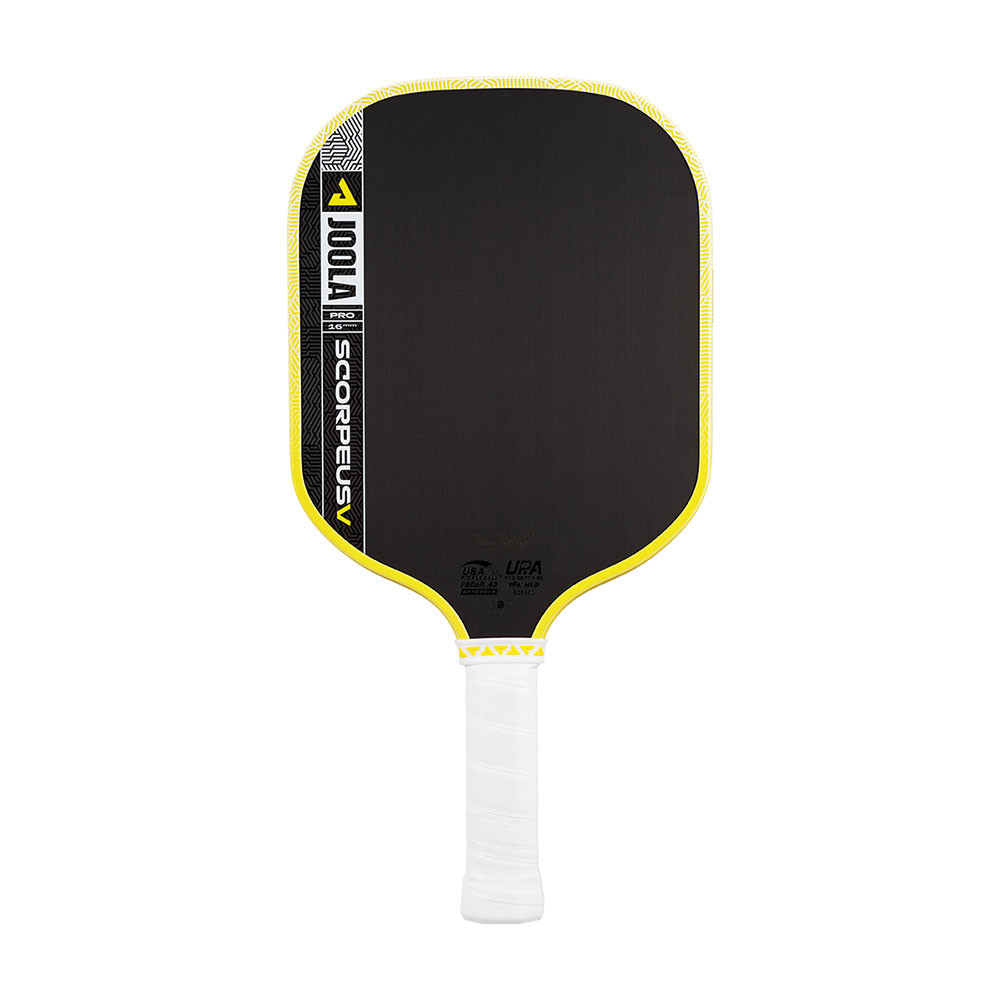
Scorpeus (Widebody)
The Scorpeus is the most forgiving shape in the lineup. Its wider face creates a larger sweet spot and improved stability, which helps on blocks, resets, and quick hand battles at the kitchen. Players who prioritize control and consistency often prefer this shape though you give up some reach.
Shop Scorpeus >>
Hyperion (Lightweight Elongated)
The Hyperion keeps the reach of an elongated paddle but in a lighter, quicker package. It’s designed for players who value maneuverability and hand speed, particularly during fast exchanges at the net.
Shop Hyperion >>
Agassi (Heavier Elongated)
The Agassi version moves in the opposite direction, offering a heavier and more solid feel. The added mass can provide more plow-through and stability for players who prefer a paddle with more weight behind their drives and counters.
Shop Agassi >>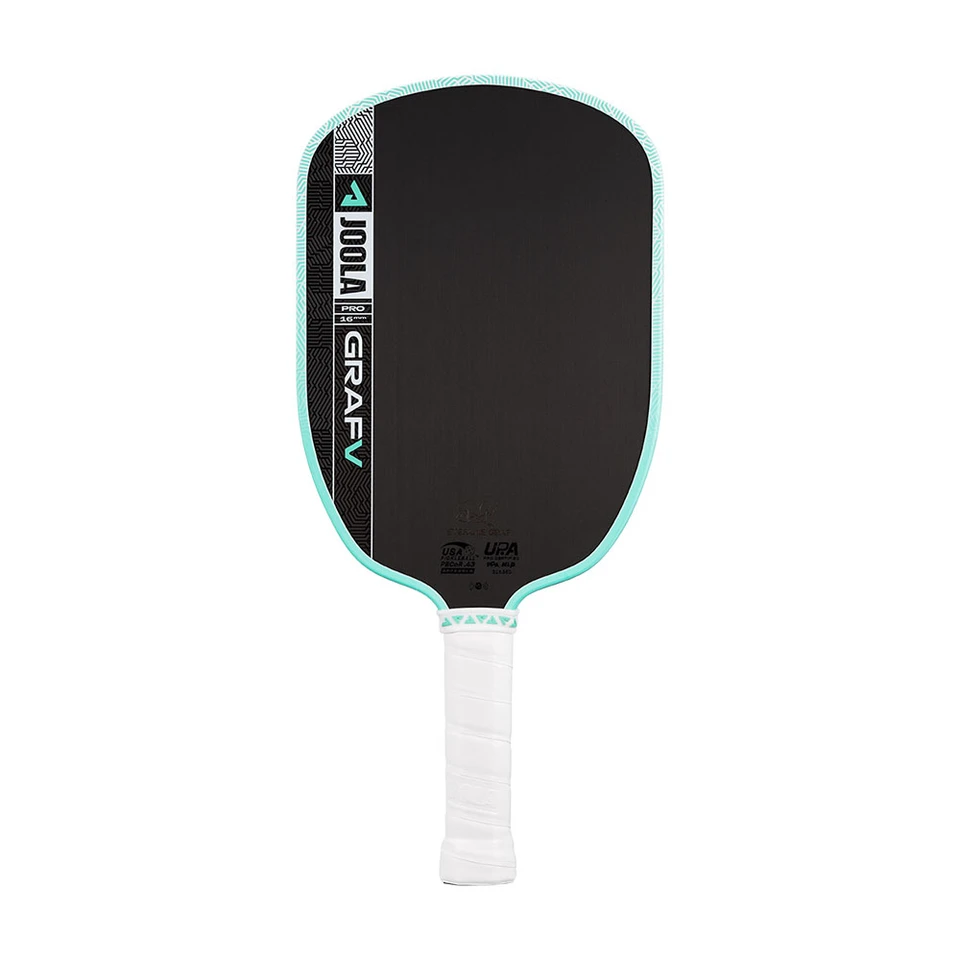
Graf (Smaller Grip)
The Graf version is the same shape as the Agassi, and shares the same features/benefits. The only difference is that the grip is smaller (4.125 in vs. 4.25 in) making it better for players with smaller hands or those who prefer smaller grips.
Shop Graf >>For most players, the Perseus and Kosmos will likely be the most popular choices, as they strike the best balance between reach, stability, and overall playability. The Scorpeus appeals more to players prioritizing forgiveness and hand speed, while the Hyperion and Agassi options serve more specific preferences around paddle weight and feel.
Construction Choices: Foam Cores and Durable Grit
Why no full foam core?
I asked JOOLA CEO Richard Lee why the company didn’t move to a full foam core.
“We don’t feel at this point that foam cores are that innovative.”
From other conversations I’ve had with JOOLA players and team members, the philosophy seems tied to player preference. Several JOOLA pros, including Ben Johns, prefer the feedback of a polymer core, and JOOLA believes polymer still delivers the best overall playing experience even if durability can sometimes be a tradeoff.
Personally, I’m not fully convinced polymer is inherently better anymore though I do think it still plays well. Multiple foam-core paddles now offer excellent feedback and ball pocketing, and adoption is growing. In my Main Paddle Monitor app, where over 1,600 players have logged their primary paddle, roughly half are currently using a Gen 4 foam-core paddle.
How JOOLA is reinforcing the core
JOOLA and many other Gen 3–style paddles have drawn scrutiny in the past around long-term core durability. One of the primary ways brands have responded has been by moving toward full foam core constructions, which has become part of their appeal and why many expected JOOLA to follow that path as well.
Instead, JOOLA chose to reinforce the existing structure. They added a layer of carbon fiber between the outer foam layer and the polymer core at the top of the paddle to increase compression strength in the area they’ve identified as the most common point of failure.
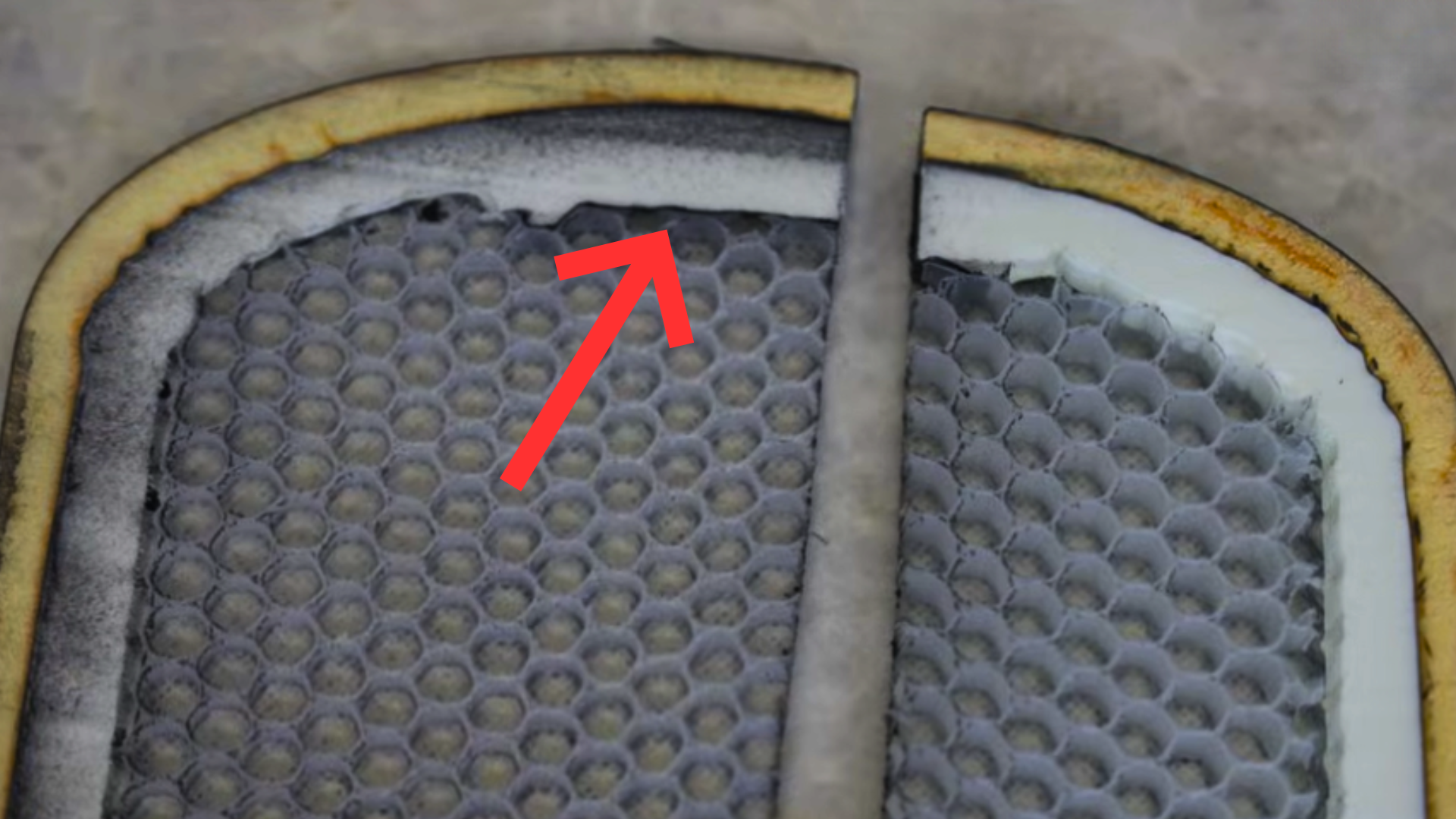
JOOLA reinforces the Pro V by adding a carbon fiber layer between the foam and polymer core to improve durability in high-stress areas.
Why no durable grit surface?
Surface durability was another area I expected to see change.
Brands like Selkirk and Six Zero have introduced surface textures that retain grit longer than traditional peel-ply carbon fiber. When I asked JOOLA product manager Austin Kim about this, he said:
“We have things in our innovation pipeline about surfaces that need additional validation and testing, but we need to stay within USAP guidelines.”
That suggests JOOLA may be working on new surface technology, but it wasn’t ready for this release.
Final Thoughts
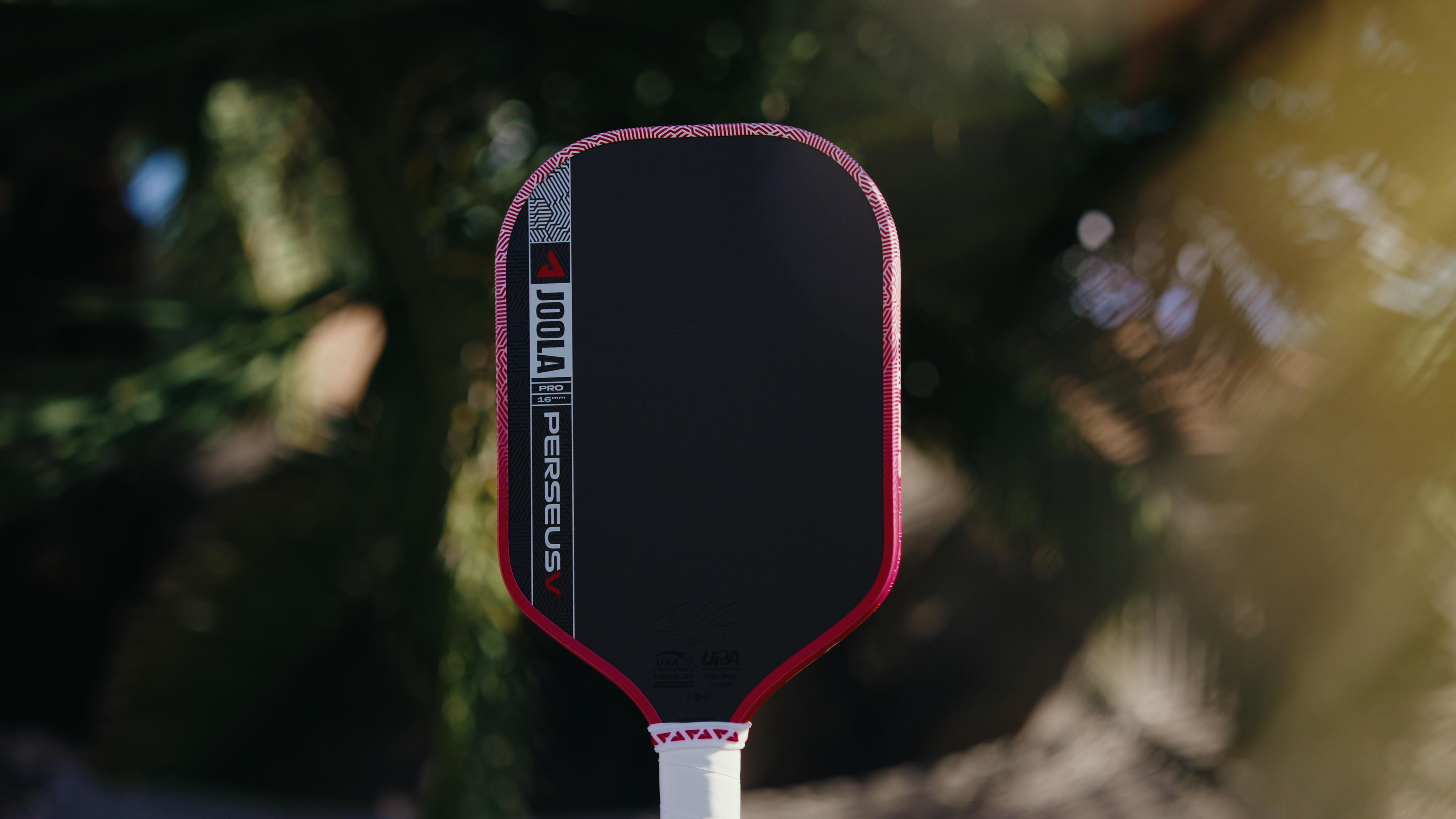
The Pro V isn’t JOOLA chasing the latest trends. It’s a refinement of the company’s existing platform.
Rather than moving to full-foam construction or introducing a new surface technology, JOOLA focused on how the paddle flexes and how energy is transferred through the frame. The result is a more controlled and consistent evolution of their Pro lineup that rewards players who generate their own power with strong mechanics and deliberate swings.
From a durability standpoint, JOOLA still has something to prove, especially at a $300 price point where long-term value becomes part of the conversation. But from a performance perspective, the Pro V doesn’t feel like a step behind. The KineticFrame concept changes how the paddle responds at contact and provides a solid foundation for future iterations.
While I don’t see the Pro V as a universal upgrade for every Pro IV player, I do think it adds another strong performance profile to JOOLA’s Pro lineup.
If you rely on your paddle to help create easy offense, the Pro IV or 3S may still be the better fit. But if you bring your own power and want a more controlled, predictable response, the Pro V offers a refined take on the Pro platform.
About the Author
Braydon Unsicker is the founder of Pickleball Effect , where he has published independent paddle reviews since 2019. He has tested hundreds of paddles across major brands, using hands-on testing and performance data to help players find paddles that fit their game rather than chasing marketing claims.
Share Product:
SHARE THIS: